Landing page or website: what does your business really need?
Learn when a landing page is the better choice and when you need a website, what both must have, and five quick checks for your decision.
- Published
- Reading time
- 6 min read
- Category
- Websites
Many businesses come to us with the same dilemma. Some want to launch ads but have nowhere to send visitors. Others have an old website and can't decide between a new site and one page for a campaign. The answer depends on your goal.
Below, we explain the difference and when each format makes sense. At the end, you'll find a short checklist.
Two different jobs
Landing page
A landing page is a single page with a single goal. Visitors usually arrive from an ad, email, or social media post. There they find one offer and one call to action: inquiry, sign-up, booking, or purchase.
Everything on the page supports that one step. There is no main menu leading to other topics.
Website
A website is a set of connected pages about your business. It usually includes a home page, service pages, an about page, contact details, and often a blog. Visitors use the menu and choose what to read.
A website has several goals at once. It explains what you do, for whom, and how. It should show up on Google when someone searches for your service. And it shows that a serious company stands behind the offer.
A landing page takes one visit to one decision. A website builds trust over a longer period.
Landing page for one offer
A landing page is the better choice when you have one clear offer and want people to take one step. Typical cases:
- A campaign with a start and an end. A seasonal promotion, course enrollment, or event registration.
- Paid ads. Google or Instagram ads need a destination that says the same thing as the ad.
- One call to action. There is exactly one goal: an inquiry, sign-up, call, or order.
This matters most with ads. If an ad promotes one service but leads to the home page, visitors have to search for the offer. Many won't, and they leave.
A landing page is also easier to measure. With one goal, you can see exactly how many visits end in an inquiry. That lets you compare two ads or two headlines.
The same trait is also the limit: one page can't present five different services well.
Website as the foundation
A website makes sense when you offer several things or count on visitors over the long term. The most common reasons:
- Several services. Each service gets its own page, with its own copy, examples, and answers to customer questions.
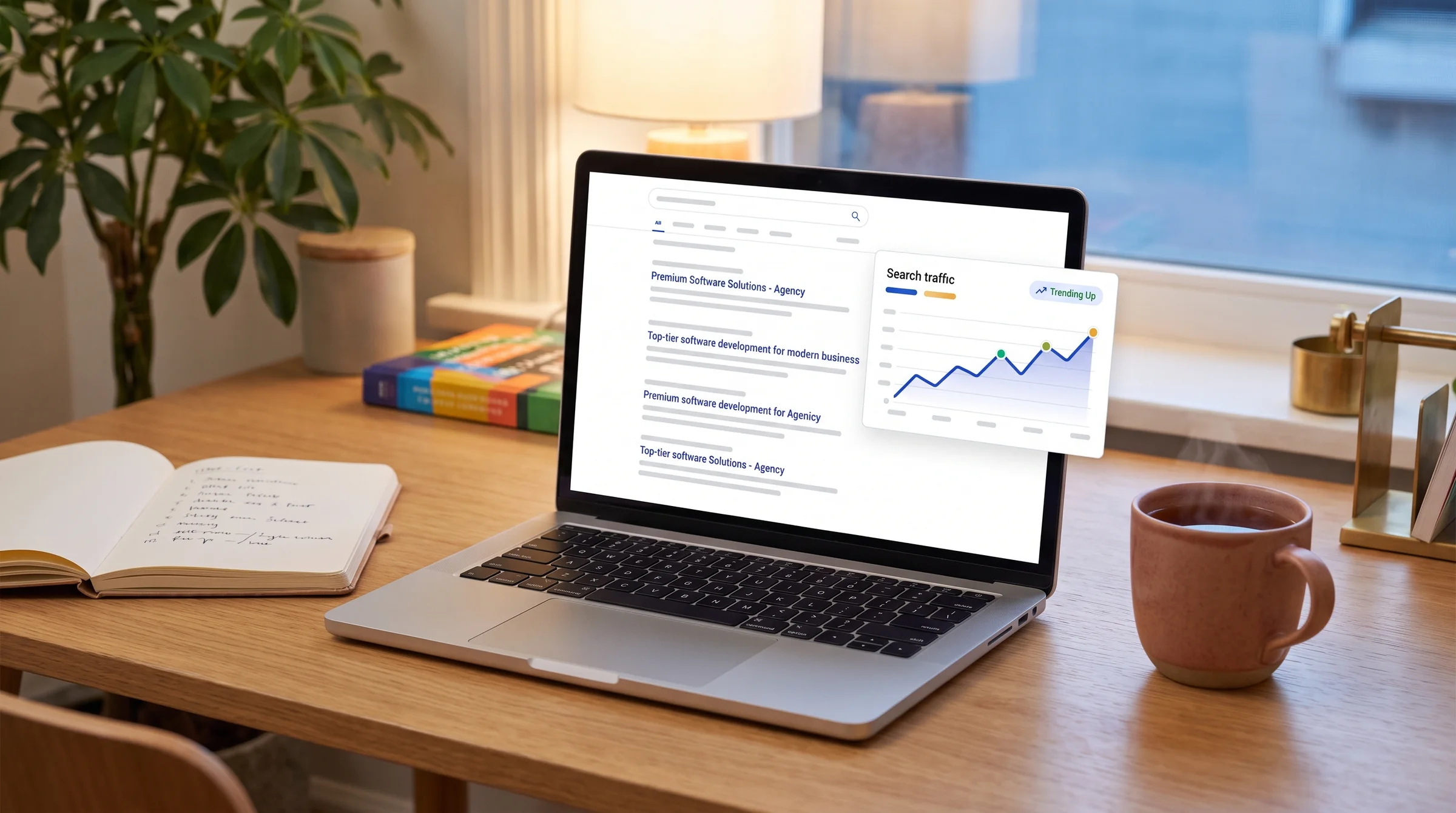
- SEO over time. Service pages and articles gradually attract visitors from search. That traffic doesn't stop when you pause your ads.
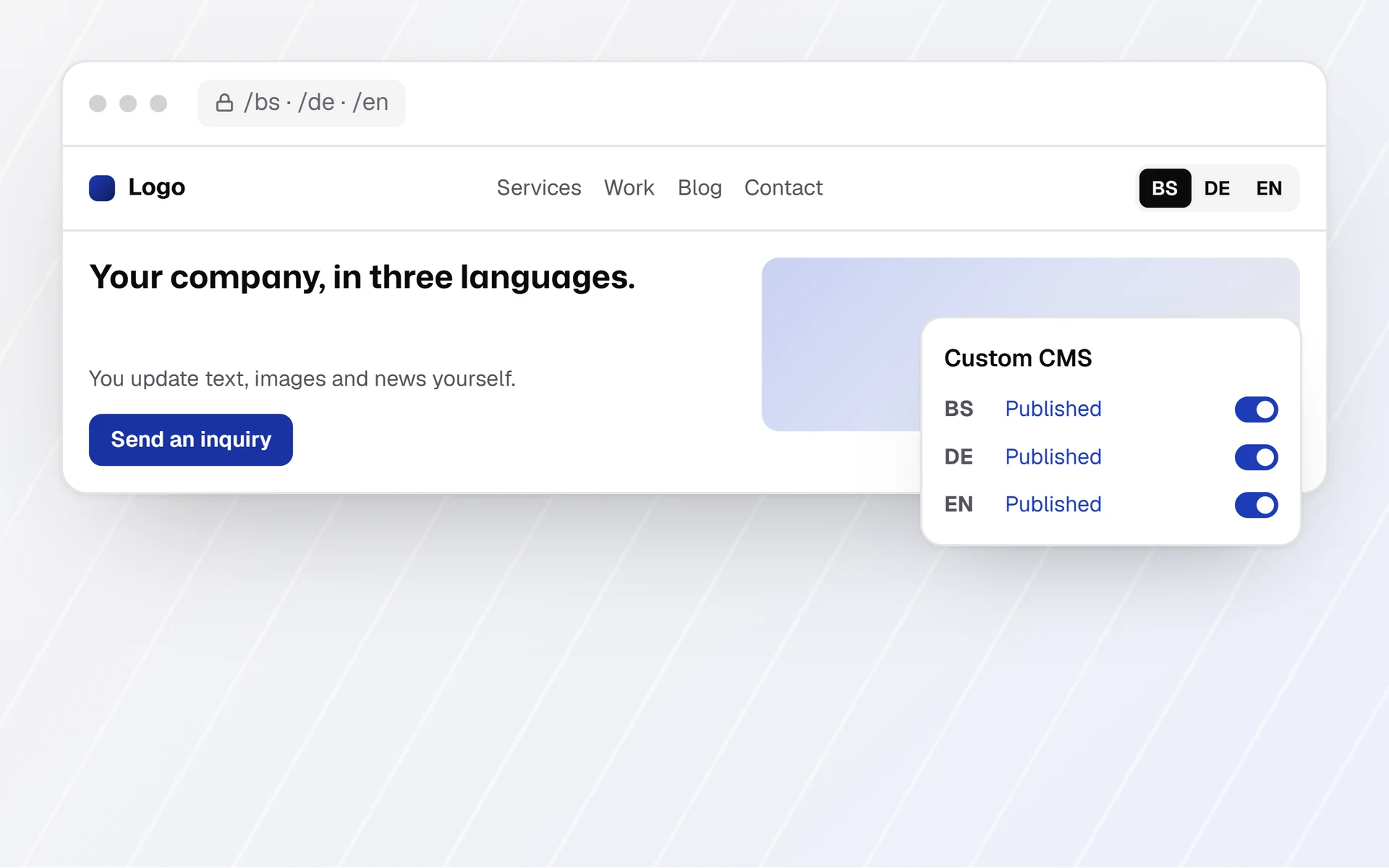
- Several languages. If you sell in more than one country, each language version needs its own URLs and copy. Then Google can show the right version to the right user.
- A CMS for your team. A content management system lets you edit text, photos, and news yourself. You don't need a developer for every small change.
- Trust. Before reaching out, people check who is behind the offer. They look for an about page, references, address, and contact details. Business cards, your Google Business Profile, and PDF proposals point there too.
Pairing with an existing site
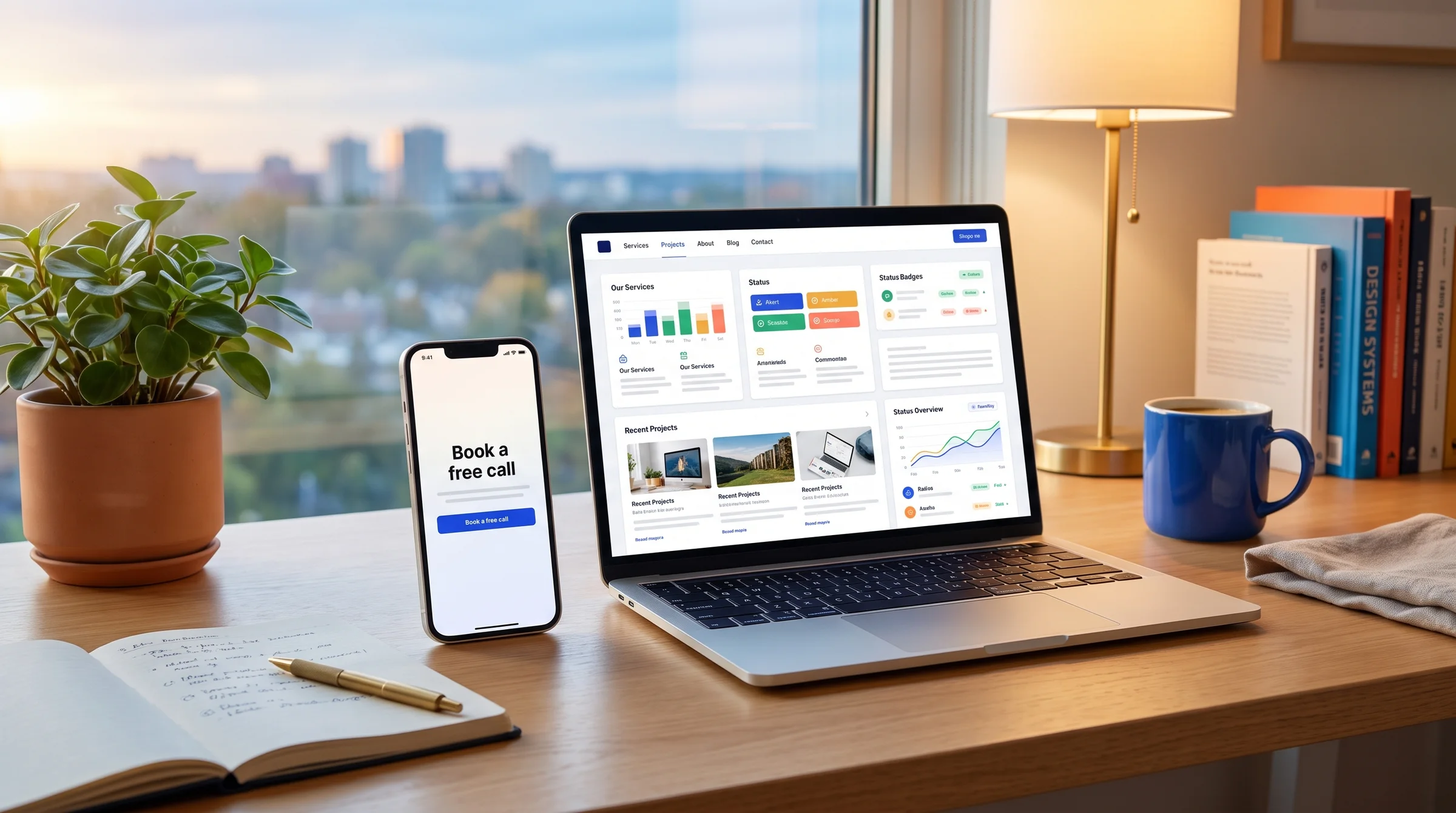
Often the answer isn't one or the other. A business that already has a website can add a dedicated landing page for each campaign.
Take a company with three locations that launches ads for a new service. The website stays as it is and still explains the full offer. The ads lead to a landing page about the new service only.
A few rules apply:
- The landing page uses the same logo, colors, and tone as the website. Visitors should recognize the company right away.
- The page lives on your own domain, for example yourcompany.com/offer. That way you build trust in your own address.
- Campaign pages often don't need to appear in organic search. A noindex tag keeps them out of results, and ads can still point to them.
- When the campaign ends, take the page down or redirect it to a matching page on your site. That way no outdated offer stays online.
Must-haves for both
This is the minimum for every landing page and every website.
Speed
Google uses three metrics called Core Web Vitals to assess user experience. Google considers these values good:
- LCP (rendering of the largest content element): 2.5 seconds or less.
- INP (response to a click or tap): 200 milliseconds or less.
- CLS (content shifting while the page loads): 0.1 or less.
Google explains the details and how to measure them on web.dev.
Mobile
Google primarily uses the mobile version of a page for indexing and ranking. Buttons need to be large enough for a finger, and forms should be short. Phone numbers and addresses should open with a single tap.
Clear message
On the first screen, visitors should see what you offer, who it's for, and what the next step is. The headline describes the benefit to the customer, not the company name. The call to action is easy to see.
Measurement
Without measurement, you can't tell what works. Set up analytics and define what success means for you: a submitted form, a call, or a purchase. For ads, also connect conversion tracking in the ad platform.
Legal pages
Once a form or analytics tool collects personal data, visitors need to know what happens to it. That is what a privacy policy is for. If you offer goods or services to people in the EU, the GDPR applies.
In the EU, cookies that aren't strictly necessary require visitor consent. Business websites in Germany and Austria also need a legal notice called an Impressum. This applies to a standalone landing page too.
Five checks before deciding
Before you decide, write down short answers on these five points.
- Number of offers. One offer fits on a landing page. Several services need a website with a page for each.
- Traffic source. If visits come mostly from ads, a landing page is a logical start. If you rely on Google search, you need a website.
- Duration. A campaign with a clear end calls for a landing page. A long-term presence calls for a website.
- Languages and markets. One language and one audience can fit on one page. Several languages and markets are a job for a website.
- Who edits content. If your team often updates text and news, you need a CMS. A short campaign usually doesn't need one.
If most answers point to a landing page, start there. If you need a website and have a campaign coming up, combining both is often the best route.
Read how we work on our landing pages and websites pages. In a free 30-minute intro call, we go through these five checks together. After the call, you receive a fixed proposal split into phases. Book a time through our contact page.